Road trip planning
Road trip essentials
A good road trip lives and dies by what you remember to throw in the boot. Pack well and the miles look after themselves; forget the basics and you're paying motorway-services prices for a phone cable and a meal deal. This is the complete road trip essentials checklist — the car, navigation, comfort, food, safety and paperwork — written UK-first and easy to screenshot before you set off. Skim it the night before, tick off what matters for your trip, and leave the rest at home.
Start planning now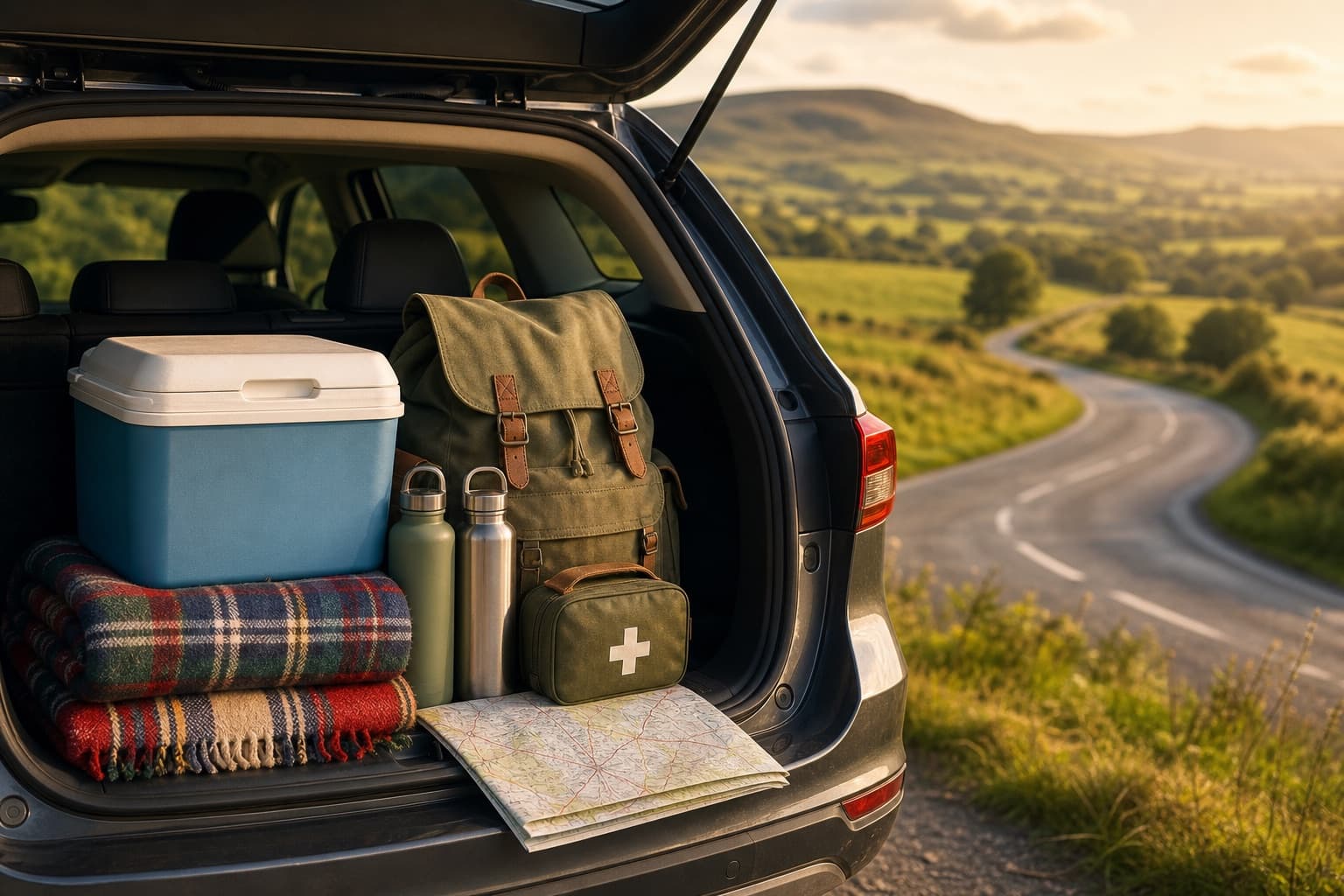
Get the car road-trip ready
The single biggest cause of a ruined trip is the car itself, and almost all of it is avoidable with a few checks the week before you leave. Sort these and you remove most of what can go wrong.
A full service or a quick once-over
Do it a week aheadIf a service is due, book it before a long trip rather than after. At the very least, run the POWER checks — Petrol/diesel, Oil, Water (coolant and screenwash), Electrics (lights) and Rubber (tyres) — a few days out, so there's time to fix anything.
Tyres, including the spare
Check tread depth and pressures on all four tyres and the spare, and adjust pressures for a fully loaded car (the higher figure in the door-frame sticker or handbook). Bald or under-inflated tyres are the most common motorway failure.
Fluids and screenwash
Top up engine oil, coolant and especially screenwash — a fly-covered windscreen into low sun is genuinely dangerous. Carry a spare bottle of screenwash for longer trips.
Fuel or charge plan
Start with a full tank or a full battery, and on remote routes note where the next reliable fuel station or rapid charger is. In the Highlands and rural Europe, petrol stations can be 50-plus miles apart and shut on Sundays.
Navigation and tech
Phone signal vanishes in the places you most want to explore — sea lochs, national parks, mountain passes. Plan for no signal rather than hoping for it.
Your route, saved offline
Map the whole trip before you leave and download offline maps for the areas you'll cross, so a dead signal doesn't strand you. Planning multi-day stops in RoadTripPlanner and exporting the itinerary means the plan rides along even when the bars don't.
Phone mount and charging cables
Easy to forgetA windscreen or vent mount keeps your sat-nav in view and legal. Pack a cable for every device plus a multi-port USB car charger, because one socket never stretches across a full car.
A power bank
A charged power bank keeps phones alive on ferry queues, picnic stops and the bit where someone leaves the dashcam plugged in all night. Charge it the evening before.
Paper backup for the key bits
Jot down your accommodation addresses, check-in times and a couple of phone numbers on paper. It weighs nothing and saves you when the battery dies at the worst moment.
Comfort, cabin and entertainment
Long hours in a small space go far better with a few comforts to hand. These are the things that turn a slog into part of the holiday.
Layers, a blanket and sunglasses
British weather does all four seasons before lunch, so pack layers everyone can peel off, a blanket for back-seat nappers, and sunglasses for the driver — low sun on a wet road is blinding.
Reusable water bottles and a flask
A refillable bottle per person and a flask of tea or coffee keep everyone hydrated and save a fortune over services. A travel mug for the driver helps at lay-by stops.
Wet wipes, kitchen roll and bin bags
Trip-saversThe unglamorous heroes of any car. Wipes and kitchen roll handle spills and sticky hands, and a couple of bin bags stop rubbish taking over the footwells.
Entertainment for the miles
A playlist or two, a downloaded podcast or audiobook, and a few no-equipment games keep the car happy without screens. Download anything streamed before you lose signal.
Travel pillow and basic toiletries
A neck pillow makes passenger naps possible, and a small wash bag with toothbrushes and any medication means an unplanned overnight isn't a crisis.
Food, drink and the cool box
Snacks keep the peace and keep the driver sharp between proper stops. A cheap cool box unlocks a whole second tier of options on a warm day.
A snack bag everyone can reach
Pack low-mess snacks that don't melt — nuts, flapjacks, breadsticks, fruit and chewy sweets — in a bag within arm's reach, not buried in the boot. See our road trip snacks guide for the full list.
A cool box or insulated bag
A couple of ice packs keep drinks, sandwiches, cheese and yoghurts cold all day. Stash it in a footwell rather than the boot so it's easy to dip into.
Plenty of water
Don't skimpCarry more water than you think you need, especially in summer or on remote routes. It keeps the driver alert, heads off headaches, and covers you if you're stuck in a jam.
Safety and breakdown kit
You hope to never open this bag, but the day you need it you'll be very glad it's there. Most of it lives permanently in the boot.
Breakdown cover
Sort before you leaveCheck your breakdown cover is current and covers the whole trip — and Europe too, if you're heading abroad. It's the single most important thing to arrange before a long drive.
First-aid kit and any medication
A basic first-aid kit handles the small stuff, and a few days' spare of any prescription medication means a delay never becomes a problem. Keep both somewhere you can reach quickly.
Warning triangle, hi-vis and torch
A reflective warning triangle and a hi-vis vest for each person let you break down safely, and they're legally required in much of Europe. Add a torch or head torch with working batteries.
Jump leads, a tyre kit and a phone charger
Jump leads or a portable jump pack, a tyre inflator or repair kit, and a car charger cover the most common roadside hiccups. Know where your spare wheel, jack and locking wheel-nut key live.
An ice scraper and a blanket in winter
For colder months add an ice scraper and de-icer, warm layers and a blanket, and a little extra food and water in case you're held up in snow.
Paperwork, documents and driving abroad
The boring bit that brings a trip to a halt if you've missed it. Most of it is quick to check, and the extras only apply if you're crossing the Channel.
Driving licence and insurance
Carry your driving licence, and check your car insurance covers the trip — including Europe if you're driving abroad, where you may need to tell your insurer in advance. Make sure your MOT and road tax are valid too.
Accommodation and booking confirmations
Save campsite, hotel or ferry confirmations to your phone and jot the essentials on paper. Note check-in windows so a late arrival doesn't catch you out.
Passports and travel insurance for abroad
For trips to Europe, check passports have enough validity, and arrange travel insurance and a current GHIC card for healthcare cover. Keep digital and paper copies of the important documents.
The kit Europe requires
Check per countryDriving in Europe, you'll typically need a UK sticker (unless your number plate already shows a UK identifier — the old GB sticker no longer counts on its own), headlamp beam deflectors, a warning triangle and hi-vis vests. Some countries require extras like a breathalyser, so check the rules for everywhere you're driving before you go.
Road trip essentials FAQ
What are the essentials for a road trip?
The core road trip essentials are a roadworthy car with good tyres and fluids, breakdown cover, a saved route with offline maps, charging cables and a power bank, water and low-mess snacks, a first-aid kit, warm layers, and your licence and insurance documents. Build from there based on the length of the trip.
What should I pack for a road trip?
Pack by category so nothing slips through: the car (spare tyre, screenwash, breakdown kit), navigation (phone mount, cables, power bank, offline maps), comfort (layers, blanket, water, snacks, entertainment), safety (first-aid kit, warning triangle, hi-vis, torch) and paperwork (licence, insurance, booking confirmations). Tick off what your specific trip needs.
How do I prepare my car for a road trip?
A week before you leave, run the POWER checks — petrol or charge, oil, water and screenwash, electrics and lights, and rubber (tyre tread and pressures, including the spare). Book any due service early, confirm your breakdown cover is current, and start the trip with a full tank or full battery.
What documents do I need for a road trip?
In the UK, carry your driving licence and make sure your insurance, MOT and road tax are valid. Driving abroad in Europe, add your passport, travel insurance, a GHIC card, a UK sticker if your number plate doesn't show one, and proof your insurance covers the trip.
What do you legally need in your car when driving in Europe?
Requirements vary by country, but you'll commonly need a UK sticker (unless your plate already shows a UK identifier), headlamp beam deflectors, a warning triangle and a hi-vis vest within reach. Some countries require extras such as a breathalyser or spare bulbs, so always check the rules for every country on your route before setting off.
What are the road trip must-haves people forget?
The most commonly forgotten road trip essentials are screenwash, a phone mount, enough charging cables for everyone, a power bank, wet wipes and bin bags, sunglasses for the driver, and paper copies of bookings and addresses for when the phone battery dies.