Camping guide
Wild camping in Northumberland
Northumberland is one of the most tempting corners of England to sleep under canvas: empty fells, the cleanest night skies in the country, and a coastline of dunes, castles and wide pale beaches. But wild camping here isn't the free-for-all some assume — England isn't Scotland, and the law is stricter than the scenery suggests. This guide explains where you actually stand, where responsible wild camping is realistically tolerated, how to leave no trace, and the reliable campsites that make a perfectly good — and legal — base when wild camping isn't an option.
Start planning now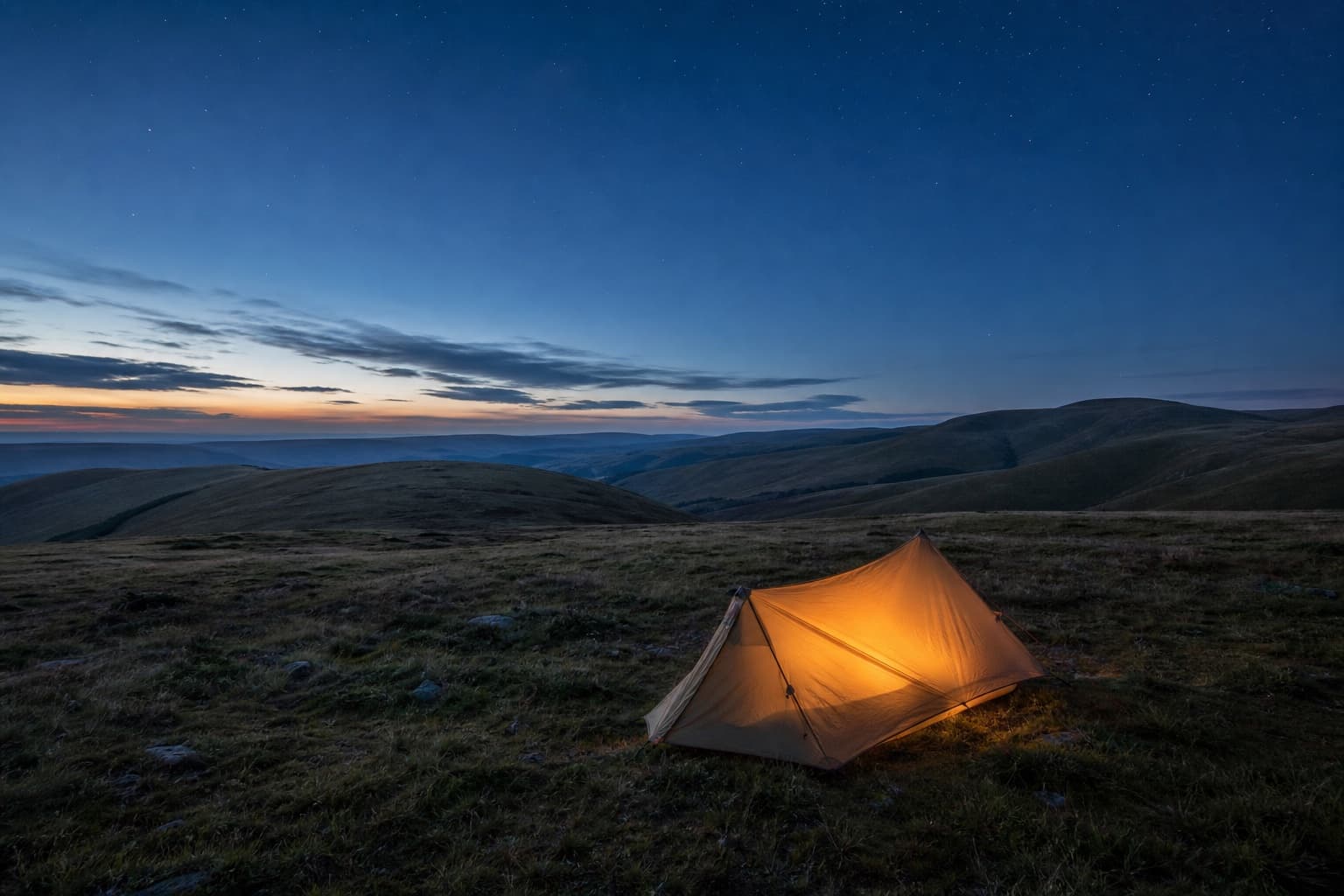
Is wild camping legal in Northumberland?
The honest answer is: not by default. In England and Wales there is no general right to wild camp, and that includes Northumberland. Almost all land — even open-looking moorland and fell — belongs to someone, and pitching a tent without the landowner's permission is technically trespass. This is the crucial difference from Scotland, where the Outdoor Access Code grants a right to camp responsibly on most unenclosed land. South of the border you don't have that right, so the sensible approach is to either get permission, stick to the high ground where responsible camping is tolerated, or simply use a campsite. None of that means Northumberland is off-limits to campers — it just means doing it thoughtfully rather than assuming you can pitch anywhere.
Where wild camping is realistically tolerated
Northumberland National Park takes a pragmatic line on wild camping high on the open fells: it isn't a legal right, but discreet, responsible, one-night camping well away from roads, walls and farmland is generally tolerated if you follow leave-no-trace principles. Check the National Park's own current guidance before you go, and apply these rules of thumb wherever you pitch.
Get high and out of sight
Camp on the open fell well above the last wall or enclosed field, out of view of roads, houses and footpaths. The Cheviots and the higher ground around Hadrian's Wall country are where discreet camping is most accepted.
Arrive late, leave early
The golden rulePitch at dusk and be packed away soon after dawn. A tent that goes up late and comes down early is the single biggest reason wild camping is tolerated at all.
One night, small group
Stay a single night and move on. Keep to one or two small tents rather than a cluster — a group of any size needs the landowner's permission and quickly stops being 'wild' camping.
Avoid farmland, livestock and enclosures
Steer well clear of fields, crops, grazing animals and anything walled or fenced. Stick to rough open ground where you're disturbing nobody and nothing.
Ask if you can
If there's a farm or house nearby, knocking and asking costs nothing and often gets a yes. Permission turns a grey area into a welcome, and locals know the best out-of-the-way spots.
What about wild camping on the Northumberland coast?
The coast is the harder place to wild camp, despite being the most photogenic. Much of the Northumberland coastline is an Area of Outstanding Natural Beauty, and the land behind the beaches is a patchwork of farmland, fragile dunes, golf links and protected nature reserves — important for ground-nesting and migrating birds. Pitching on the dunes or the beach is both damaging and very visible, and it isn't tolerated the way high-fell camping is. For a coastal trip — Bamburgh, Beadnell, Embleton, Craster, Lindisfarne — the realistic and responsible choice is a proper campsite. There are plenty within easy reach of the sand, and you'll sleep better for it.
Stargazing under the Dark Sky Park
One reason to camp in Northumberland at all is the dark. Northumberland International Dark Sky Park — covering Northumberland National Park and Kielder Water & Forest Park — is one of the largest areas of protected night sky in Europe, with some of the lowest light pollution in England. On a clear, moonless night you can see the Milky Way arc overhead with the naked eye, and the area is a favourite for catching meteor showers and, occasionally, the northern lights low on the horizon. Whether you're wild camping high on the fells or settled at a campsite within the park, give your eyes 20 minutes to adjust away from any torchlight, use a red-light head torch to preserve your night vision, and pick a night around the new moon for the darkest skies.
Leave no trace: the wild camper's code
Wild camping is only tolerated for as long as wild campers earn it. One scorched patch of grass or bag of abandoned rubbish undoes goodwill for everyone who follows. Treat these as non-negotiable.
Take everything home
Including the small stuffEvery wrapper, tea bag and scrap of foil comes home with you — pack a bin bag for it. Leave the pitch exactly as you found it, or tidier.
No open fires
Fires scar the ground, spread fast across dry moorland and grass, and are deeply unwelcome. Cook on a small camping stove instead, and never leave it unattended.
Deal with toilet waste properly
Go at least 30 metres from water, paths and your pitch, bury it in a small hole, and carry out all toilet paper in a sealed bag. Never leave tissue behind a rock.
Keep water clean
Wash and dispose of any waste water well away from streams, lochs and springs — never use soap or detergent directly in running water.
Keep it quiet and low-key
Keep noise down, keep groups small, and keep dogs under close control near livestock and ground-nesting birds. The aim is to leave no sign you were ever there.
Reliable campsites: the legal alternative
When wild camping isn't appropriate — on the coast, with a group, or simply when you'd rather have a shower and a tap — Northumberland's campsites are excellent and easy bases for exploring. Book ahead in summer and over school holidays, when the popular coastal sites fill up fast.
Coastal campsites and holiday parks
Around Bamburgh, Beadnell, Seahouses and Embleton you'll find campsites and holiday parks within walking distance of the beach — ideal for boat trips to the Farne Islands or a sunrise on the sand.
Kielder Water & Forest Park
Campsites in and around Kielder put you right inside the Dark Sky Park, deep in forest and beside England's largest reservoir — about as dark and quiet as a pitch in England gets.
Hadrian's Wall country
Sites near Haltwhistle, Bardon Mill and Once Brewed make a handy base for walking the Wall and the central crags, with the high fells on your doorstep.
Cheviots and farm campsites
Small farm and back-to-basics campsites in and around the Cheviot Hills offer a wilder feel with permission and a tap — a good compromise if true wild camping feels a step too far.
Certificated and adults-only sites
For touringSmall five-pitch certificated sites (through clubs like the Caravan and Motorhome Club and the Camping and Caravanning Club) are dotted across the county — quiet, cheap and perfect for a campervan touring the region.
Wild camping in Northumberland FAQ
Is wild camping legal in Northumberland?
There is no general right to wild camp in Northumberland, as there is in Scotland. In England all land has an owner, so strictly you need the landowner's permission to pitch. In practice, discreet, responsible one-night camping high on the open fells is tolerated if you follow leave-no-trace principles, but the safest options are to get permission or use a campsite.
Can you wild camp in Northumberland National Park?
Northumberland National Park takes a pragmatic view: wild camping isn't a legal right, but discreet, responsible camping high on the fells — well away from roads, walls and farmland, for a single night, leaving no trace — is generally tolerated. Check the National Park's current guidance before you go, pitch late and leave early, and keep groups small.
Can you wild camp on the Northumberland coast?
Wild camping on the Northumberland coast isn't really tolerated. The coastline is an Area of Outstanding Natural Beauty, and the land behind the beaches is mostly farmland, fragile dunes and protected nature reserves important for birdlife. Camping on the dunes or beach is damaging and very visible, so for a coastal trip use one of the many campsites near Bamburgh, Beadnell or Embleton instead.
Where can you wild camp for free in Northumberland?
The high, open ground of the Cheviot Hills and the fells of Northumberland National Park is where responsible wild camping is most realistically tolerated — well above the last wall, out of sight of roads and houses, for one night only. It's still not a legal right, so camp discreetly, leave absolutely no trace, and ask the landowner's permission whenever you can.
Is Northumberland good for stargazing?
Northumberland has some of the darkest skies in England. The Northumberland International Dark Sky Park, covering the National Park and Kielder Water & Forest Park, is one of the largest protected dark-sky areas in Europe, and on a clear, moonless night you can see the Milky Way with the naked eye. Pick a night near the new moon, use a red-light torch and let your eyes adjust for the best views.
When is the best time to camp in Northumberland?
Late spring to early autumn (roughly May to September) offers the warmest, longest days and the best chance of settled weather, though it's also the busiest, so book coastal campsites ahead. For the darkest skies and the chance of the northern lights, the longer nights of autumn and winter are better — pack proper cold-weather kit, as the fells and coast can be exposed and bitter.